
July 19, 2026
World Cup Fever Is Starting. Pelé Learned on a Sock Full of Newspaper.
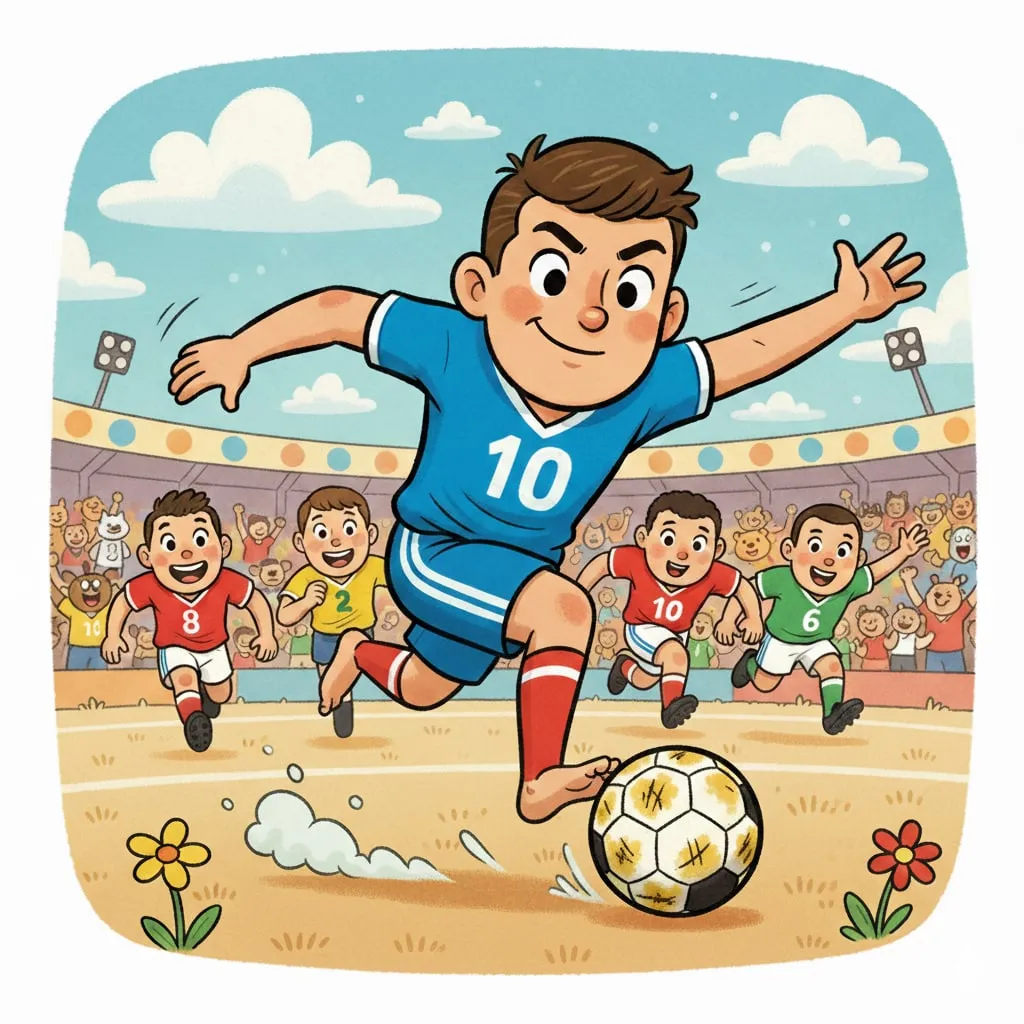
The World Cup is close enough now that the adverts have started, and with them the usual parade of boots that cost more than my first car.
My son is a swimmer, not a footballer, but the equipment conversation is identical in every sport. There is always a thing he doesn’t have that the fast kids have, and there is always a voice suggesting that the thing is why they’re fast.
So this is the story I keep handy.
A boy called Dico
Long before the three World Cups, he was Edson, growing up in Bauru, Brazil. Everyone called him Dico. Nobody called him Pelé yet; that was a school nickname he initially hated and complained about.
His father had been a promising player himself until a knee injury finished it, and there was very little money. Dico shined shoes at the railway station and swept up in a tea shop to bring some home.
A real football was out of the question. Boots were not even a conversation.
So they made one
He and his friends solved it the way children do, which is to say without asking anybody.
Old newspaper, stuffed into a large stray sock. Wrapped tightly with string, tied off at the end. Sometimes a grapefruit instead, when there was one going.
It didn’t bounce properly. It went soft in the rain and came apart regularly and had to be rebuilt. They played with it anyway, barefoot, on packed dirt in the streets of Bauru.
The accidental advantage
Here’s the part I find genuinely interesting, and it’s not a motivational point, it’s a technical one.
A ball that behaves unpredictably forces you to control it constantly. Every touch is a correction. You can never hit it and assume where it’s going, so you develop a habit of reading the ball that players with good equipment never quite need to build.
And barefoot, you learn precisely where the ball meets your foot. Not roughly. Precisely.
He was building the touch that would later be described as magic, using materials that cost nothing, because nothing was what he had.
What my son takes from it
Not “be grateful”, which is the version adults usually reach for and which lands with a thud.
Something more like: the equipment is not the reason. He knows swimmers with worse kit who beat him, and swimmers with better kit who don’t, and the story makes an argument he can check against his own experience.
Also this, which is the bit I actually care about: Dico didn’t wait for the right conditions. He was never going to get the right conditions. He started with a sock.
If your child is watching the World Cup this summer, it’s worth mentioning at some point that the greatest player of the last century learned on rubbish, in the street, with no shoes on.
Somewhere right now there’s a kid with the wrong ball, playing anyway.