
August 8, 2026
The Sky Goes Strange on August 12, and We're Not Missing It
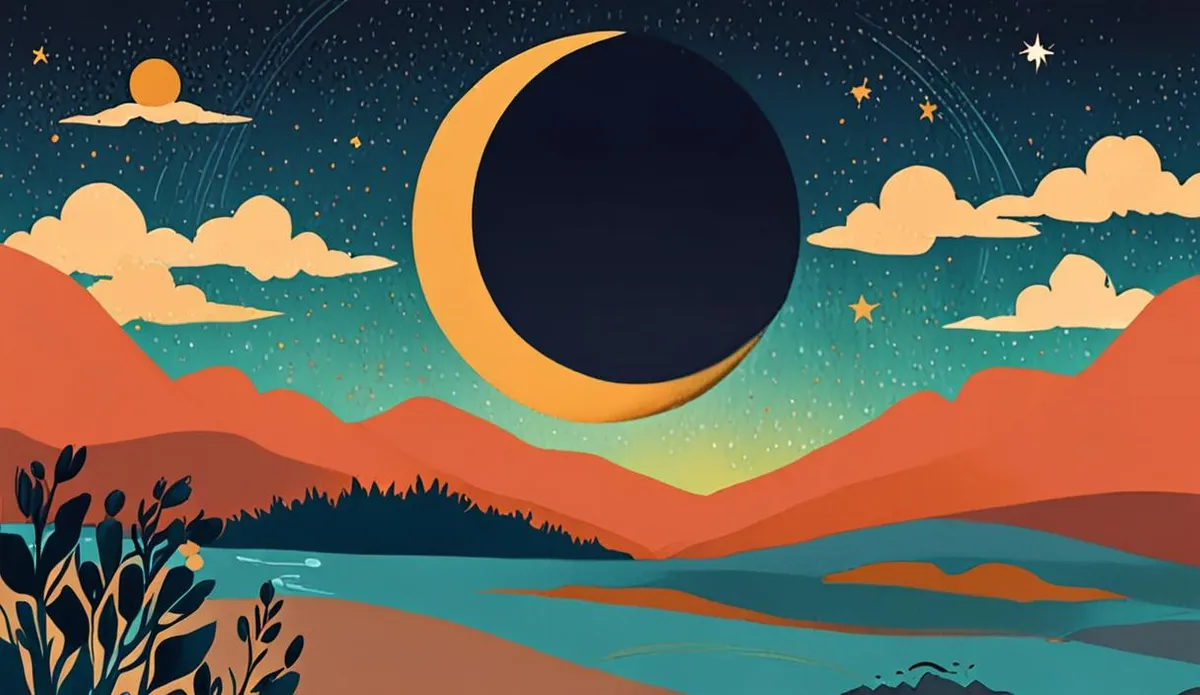
There’s a solar eclipse on August 12, and I keep circling the date on the calendar like it’s something rare, because for most of us it is. We don’t get many chances to stand outside in the middle of an ordinary afternoon and watch the sky do something it almost never does. Kids especially seem to sense that this is different from a regular sunny day, even before they understand why.
What Actually Happens During a Solar Eclipse on August 12
A solar eclipse happens when the moon slides between the earth and the sun and blocks some or all of the sunlight for a little while. Depending on where you live, the moon might cover only a slice of the sun, or nearly the whole thing. It’s not instant. It creeps in slowly, the light dims in a way that feels slightly wrong, shadows sharpen, and then it creeps back out again. I find that part almost more interesting than the eclipse itself, the slow build and the slow release.
For kids, the simplest way to explain it is with two objects and a flashlight at the dinner table. A ball for the moon, a lamp for the sun, and their own head as the earth. Move the ball between the lamp and their eyes and they’ll see the shadow pass. It clicks faster than any diagram.
Watching It Without Staring Directly at the Sun
This is the one part of eclipse day that actually needs care, so here’s what works for us. We use eclipse glasses made for solar viewing, not sunglasses, not smoked glass, not anything improvised. Regular sunglasses do nothing to protect eyes during an eclipse, even though the light looks dimmer. If glasses aren’t available, a simple pinhole projector, a piece of cardboard with a small hole poked in it, held up so the sun’s image lands on a second piece of paper, works fine and keeps everyone looking at a projection instead of the sky. We treat it the same way we’d treat crossing a parking lot, calm, matter of fact, no drama, just a rule we follow because it makes sense.
Why the Fuss Is Worth It
I’ll admit part of me wonders if I’m building this up too much for one afternoon of dimmer light. But then I think about how rarely we ask a kid to just stand still and watch the sky change in real time, with no screen involved, nothing to swipe. An eclipse asks for patience. It rewards the kid who keeps looking instead of getting bored after thirty seconds. That’s not nothing.
It’s also a nice hinge into bigger questions, if a kid is in the mood for them. Why does the moon fit so precisely over the sun from our angle when the sun is so much bigger? Why does this only happen in certain places and not everywhere at once? I don’t always have a tidy answer, and I’ve learned that saying “I’m not sure, let’s look it up together” lands better than pretending I know.
A Small, Ordinary Plan
Our plan for August 12 is not elaborate. Glasses in a drawer where we’ll actually find them, a spot outside, maybe ten minutes before and after the peak to just watch. No countdown, no big production. If it’s cloudy where you are, that’s fine too, there will be another one eventually, and the conversation about why the sky sometimes goes strange is worth having either way.