
July 19, 2026
The 10-Minute Summer Reading Challenge (From a Mom With No Spare Hours)
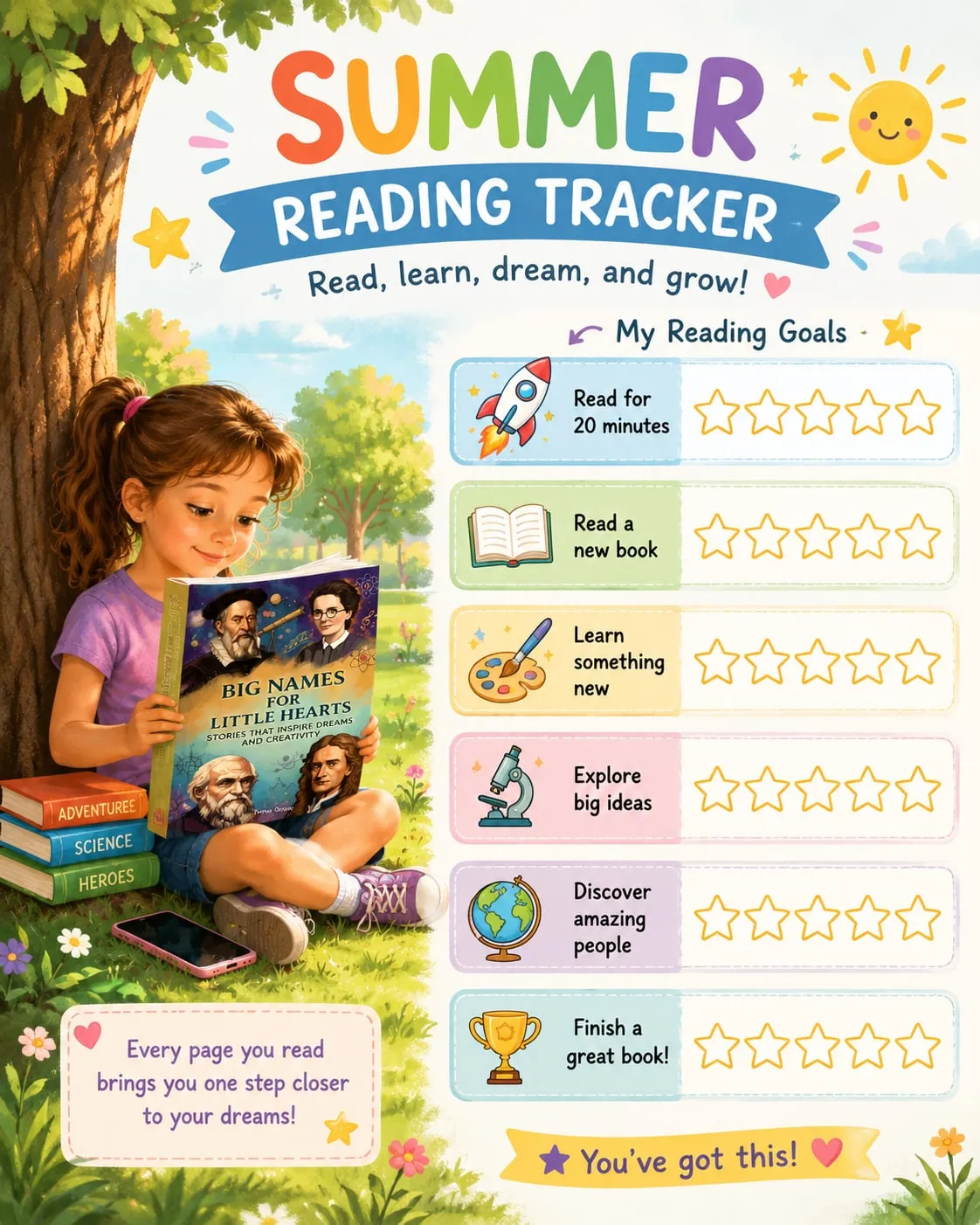
Let me tell you what our summer days actually look like, because I think the reading advice I read online is written for a family I have never met.
My son swims. Three hours of training, most days. Add getting there, getting back, getting dry, eating roughly the volume of a small horse afterwards, and the day is essentially gone. He comes home with wet hair and that particular exhaustion swimmers get, and somebody is going to suggest he now settles down with a chapter book?
For a while I felt guilty about this. Everyone else seemed to be doing summer reading logs.
So we made ours smaller. Much smaller. Ten minutes.
The whole challenge
Ten minutes of reading a day. That is genuinely all of it.
No screens for those ten minutes. No book report afterwards. No comprehension questions, no log to hand in to anybody, no minimum page count. Any spot counts — the couch, the car, the floor, the back garden.
If he keeps going past ten minutes, wonderful, I say nothing and leave the room. If he closes the book at nine and a half, that also counts as finished.
The smallness is the point. Ten minutes is too short to argue about. I have never once had to negotiate over ten minutes, and I have negotiated over almost everything else.
Why the small daily version wins
There is a thing called the summer slide — the reading skills kids quietly lose over the holidays — and the research on it is fairly grim. But the fix in most of those studies is not dramatic. It is just regular.
Ninety minutes of reading once a week feels productive and mostly isn’t. Ten minutes every day is seventy minutes a week, which is less, and it works better. Because it isn’t really about the minutes. It is about seven separate moments where reading was a normal part of the day rather than a thing you were made to do.
Habits attach to other habits, so ours sits right after the shower, when he’s too tired to want the tablet anyway. Yours will attach somewhere else. It doesn’t matter where, as long as it’s the same somewhere.
If your child does not like fiction
Mine wasn’t keen for a long time. Made-up people doing made-up things, and he had opinions about that.
True stories were different. A real story comes with a promise a novel can’t make: this happened. Somebody actually did this. He stopped being asked to imagine and started being told something, and that turned out to be the whole difference.
And the people in those stories are rarely what he expects. Not born brilliant. Not born brave. Usually a child with an odd obsession and a problem that wouldn’t leave them alone, spending years being bad at it before it worked.
He is twelve and does something for three hours a day that he was once very bad at. He recognises those people.
Practical notes, learned the hard way
Let them choose the book. Even if you would not have chosen it. Especially then.
Read your own book next to them if you can manage it. Ten minutes of me reading says more than any amount of me encouraging.
Put an X on the wall calendar. I resisted this because it felt gimmicky. It works anyway; there is something in children that cannot bear to break a chain of X’s.
And when you miss a day, say nothing at all about it. One missed day is nothing. Three missed days is still nothing. Start again on Tuesday without a speech.
Ten minutes a day across a summer comes to about twenty hours of reading. Nobody notices it happening. Everybody notices in September.