
August 20, 2026
A Crocodile the Size of a School Bus, and What It Teaches Us About Curiosity
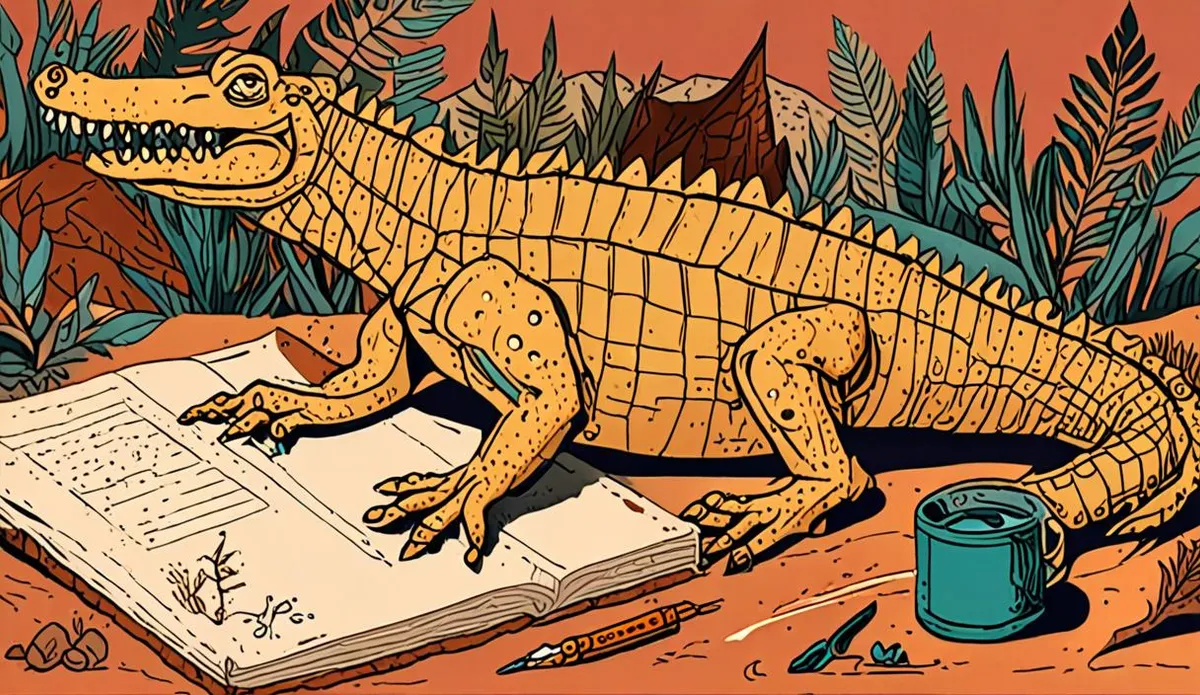
Somewhere in South America, buried in rock for tens of millions of years, was a crocodile so enormous that scientists are still arguing over exactly how it hunted. News broke recently of a newly studied giant prehistoric crocodile fossil, the kind of predator that could have swallowed a small dinosaur whole. My first reaction, honestly, was the same as my kid’s would be: how do they even know that from a pile of old bones?
That question turns out to be the whole point.
What a fossil discovery actually tells scientists
A skull, a few vertebrae, maybe a jaw fragment. That is often all researchers get. From that, they estimate size by comparing bone proportions to living relatives, they study tooth shape to guess at diet, and they look at the rock layers around the fossil to figure out how old it is and what the world looked like when the animal was alive. It is less “discovery” and more patient detective work, spread out over years, sometimes decades.
I think kids picture scientists finding a whole skeleton laid out neatly in the dirt, like a museum display waiting to be dusted off. The truth is messier and, honestly, more interesting: broken pieces, careful guesses, arguments between experts who disagree about what the evidence means. That messiness is worth showing kids. It is closer to how real thinking works than any tidy textbook diagram.
Curiosity as a habit, not a moment
This is where Charles Darwin comes in for me, because his whole life was built on exactly this kind of patient looking. Long before anyone had heard of him, he was a boy collecting beetles and rocks, not because a teacher assigned it, but because he genuinely wanted to know what was under the next stone. Years later, on a ship called the Beagle, he spent five years observing finches, shells, and fossilized bones, writing down what he saw without rushing to conclusions. The theory he is famous for came slowly, after mountains of careful noticing.
I find that reassuring as a parent, if I’m honest. We live in a world that rewards fast answers. My son comes home from school and wants the quick version of everything, and some days I do too, I don’t always have patience for the slow kind of wondering. But a giant fossil crocodile is a good excuse to slow down together and ask “how do we know that?” instead of just “wow, cool” and moving on.
Small ways to keep that curiosity alive at home
What works for us, when a headline like this crocodile story comes up, is treating it like a starting point instead of a finished fact. We look up a picture together, talk about what a scientist might have measured, and let the questions sit for a bit instead of answering them all right away. Ten minutes of reading about something like this, a fossil, a strange animal, an old mystery, does more for a curious mind than I used to give it credit for. It is the same small habit I lean on with books in general: a little bit, most days, adds up to a kid who asks good questions on his own.
Darwin’s own childhood curiosity, unglamorous and unhurried as it was, is one of the stories we cover in Big Names for Little Hearts, alongside other thinkers who started out just noticing the world a little more closely than everyone else. I don’t know if that kind of patient wondering can really be taught. Maybe it can only be modeled, badly and imperfectly, by parents who are also still learning how to slow down.